
2.5×faster to market across three global brandsThree global brands, 2.5× faster to market
One platform behind millions of shoppers a day, loading in under 1.2 seconds — delivered under NDA through a partner agency.
Three brands on one platform — each shipping at its own pace.
Our client is a global group behind several of the world's best-known sportswear, outdoor, and casual-wear brands. Its storefronts serve millions of shoppers a day across dozens of countries, with catalogs running into millions of items — at that scale, slow pages and slow releases both show up in revenue.
The brief: one commerce core shared across the group's brands — page loads fast enough to hold a mobile shopper, and functionality each brand can extend for its own markets without forking the platform.
What it was costing
Shoppers paid for code they never used
Each brand shipped one bundle carrying every other brand's features. Shoppers paid for that code in load time on every visit — and on mobile, that cost shows up as abandoned carts.
The revenue pages were the slow pages
Listing and detail pages carry the buying decision, and millions of items, deep variant trees, and complex filters made exactly those pages slow to render.
Every new market waited on the platform
Payment providers and delivery services had to be picked per brand, country, and region — with hard-wired integrations, each market entry began with a round of platform engineering.
What we built, and why
One core, one codebase, no forks
The application splits into layers — Core, Commerce, CMS, Regional — and each brand overrides only its own. Every storefront ships only the code it uses, and one brand's change can't stall another's release.
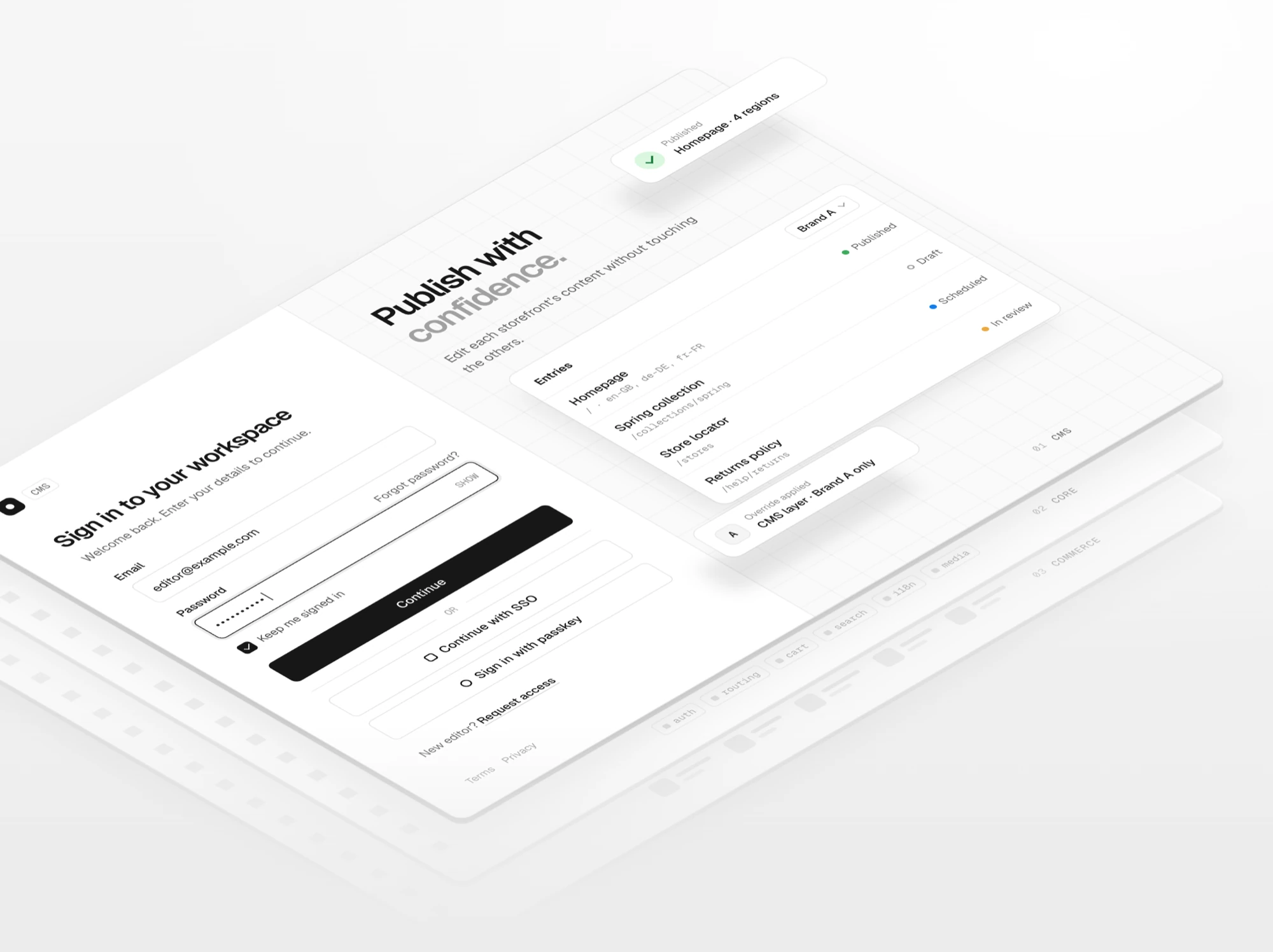
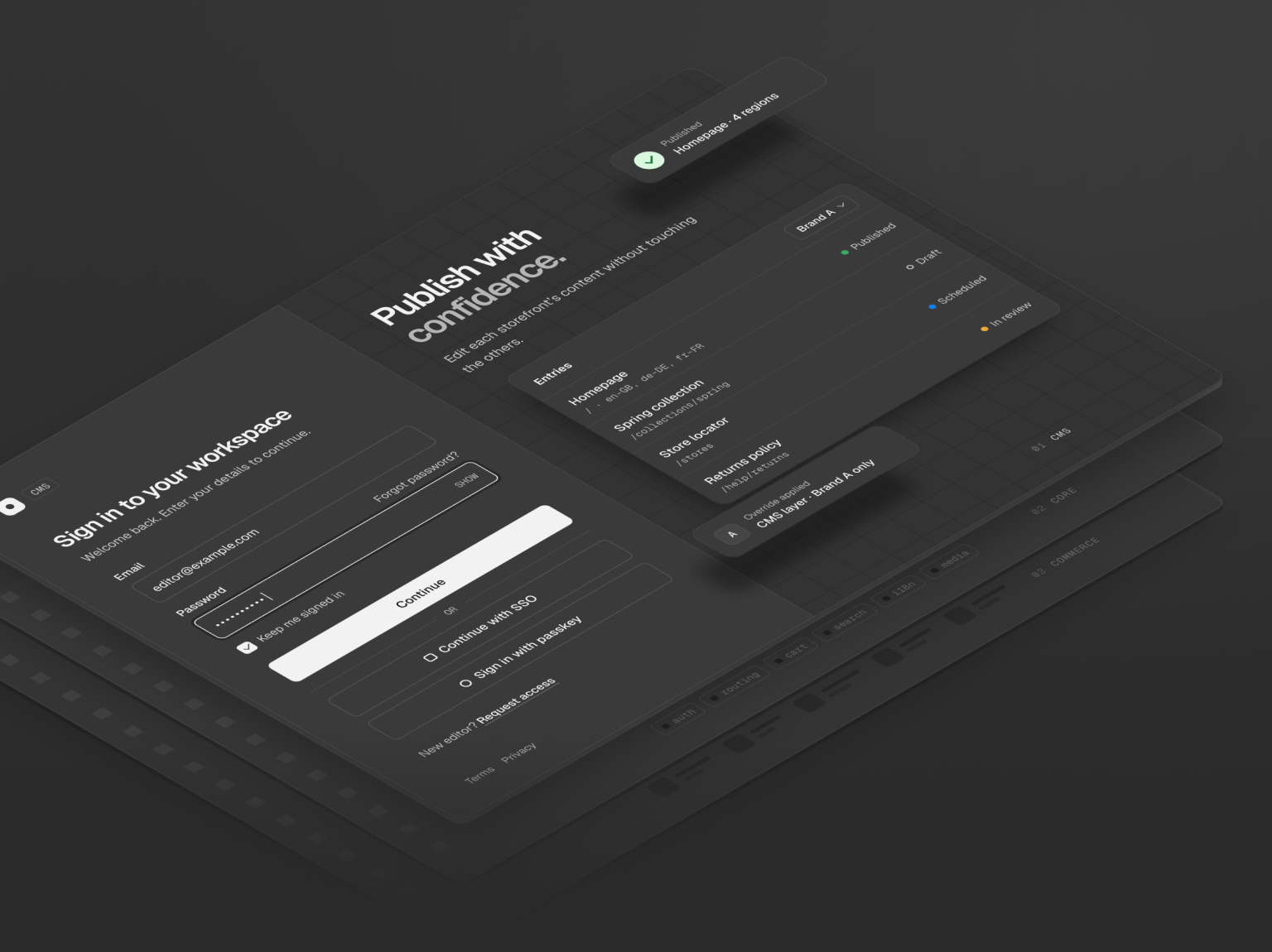
Pages that answer before the shopper waits
Server-side rendering on Nuxt.js, styles generated on demand with UnoCSS, Salesforce Commerce Cloud underneath: orders stay stable under peak load, and catalog pages answer from cache instead of rendering from scratch.
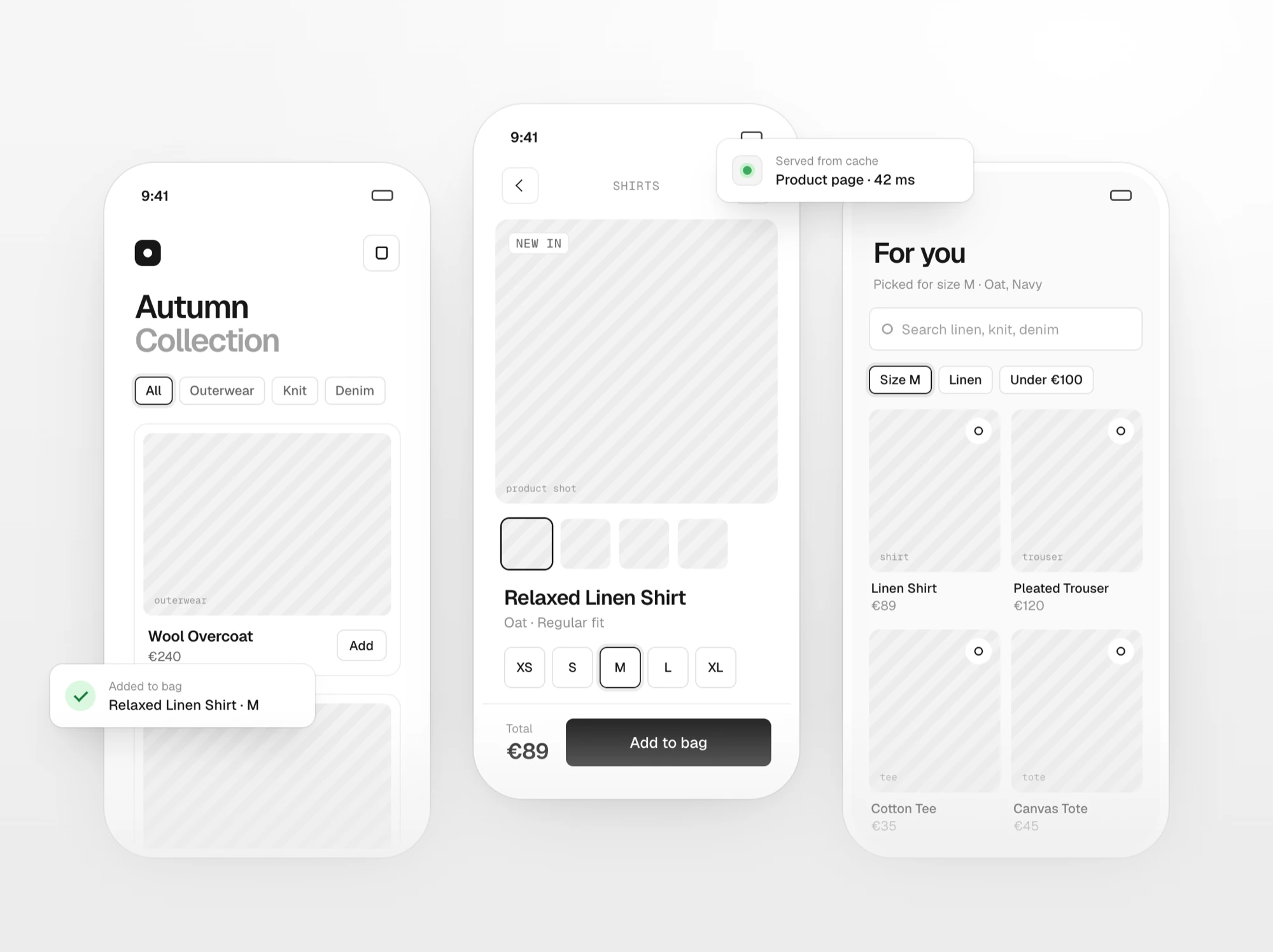
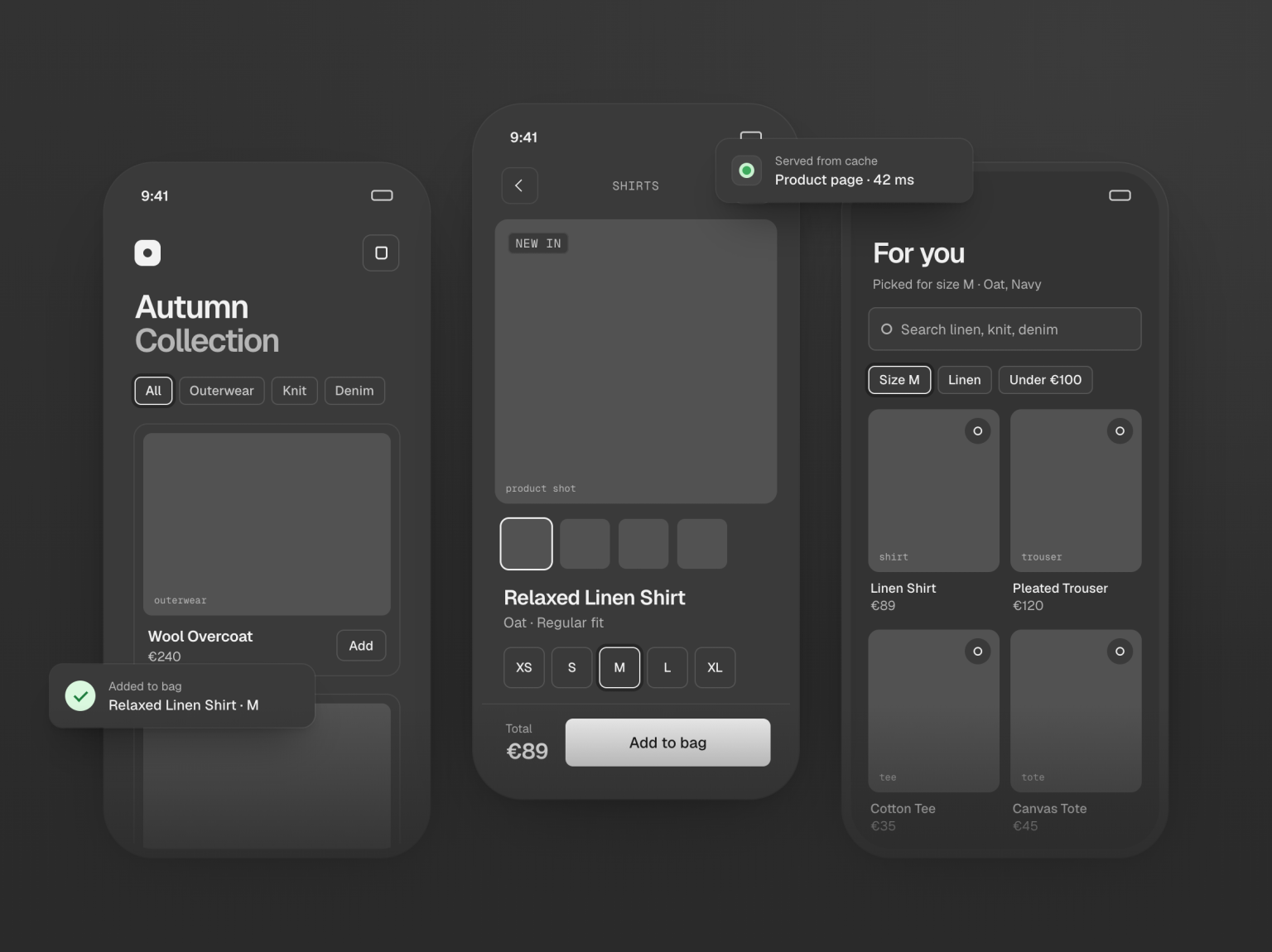
Checkout that already knows the market
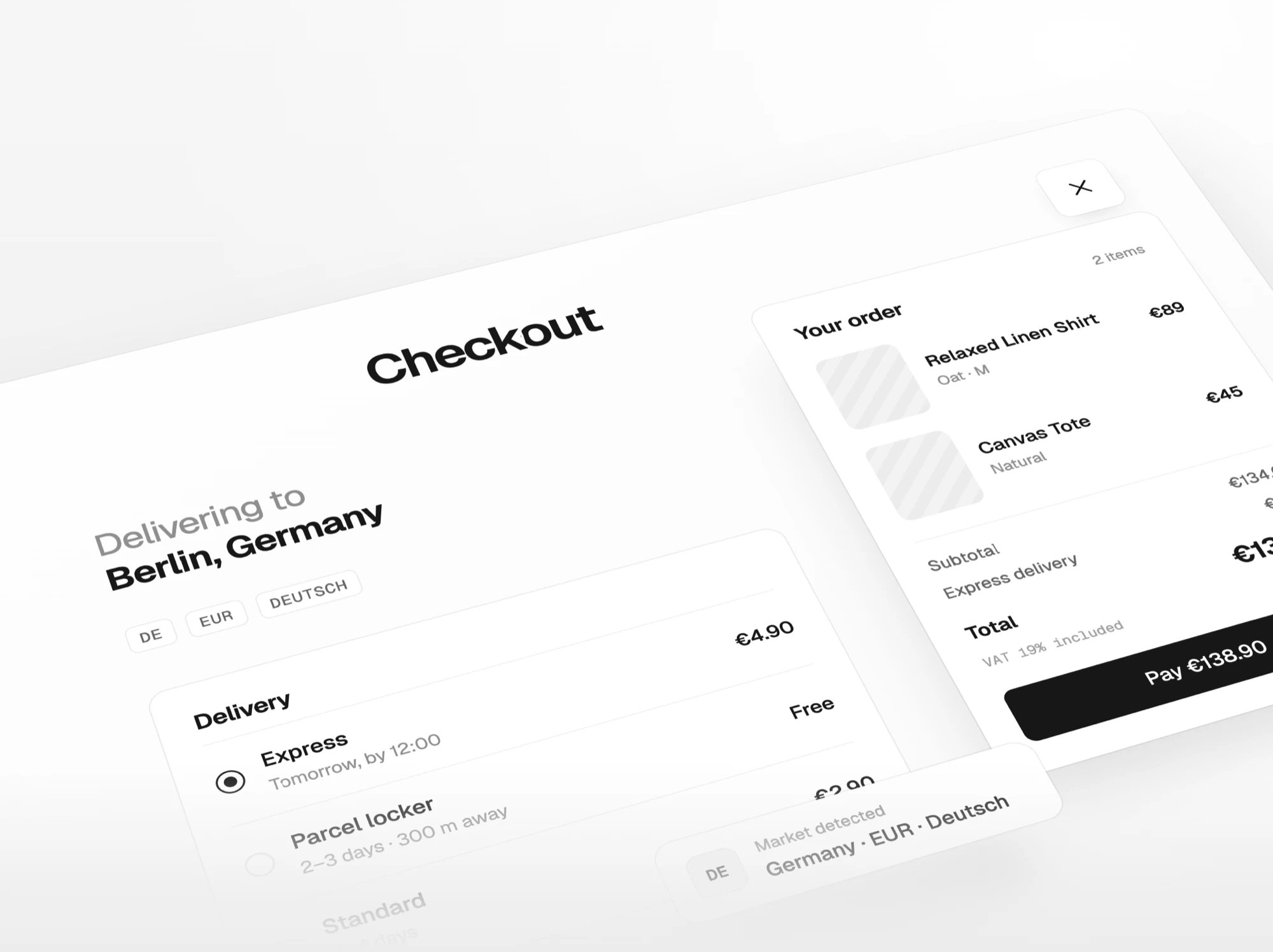
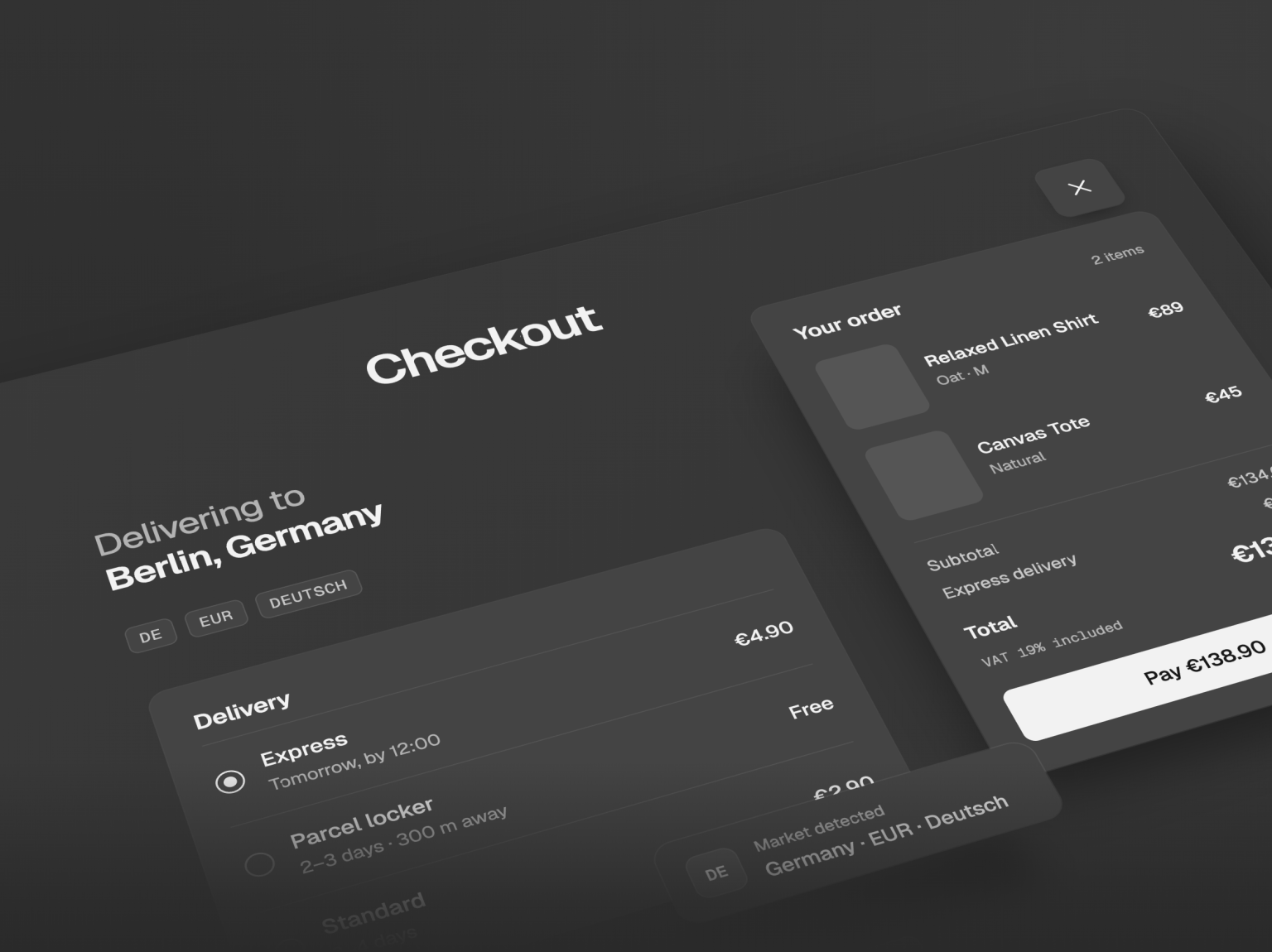
Behavior-driven recommendations, multi-criteria catalog filtering, custom product variants, and a single-step checkout that picks the local payment and delivery options for each brand, country, and region — so each new market starts from configuration.
What it changed, in numbers
Faster time to market
Redesigns and new integrations — payment providers, marketing tools — reach shoppers in a fraction of the old lead time, so campaigns and market entries hit their dates.
Largest Contentful Paint
Every Core Web Vital in the green: interactions answer in under 50 ms, layout shift is zero — speed shoppers feel and search rankings reward.
JavaScript bundle size
Each brand ships only its own code: lighter pages, faster loads on mobile, fewer abandoned carts.
The names are under NDA. The numbers are not.
The engagement ran under a strict NDA, contracted through a partner agency — the brands are among the world's best known, and keeping their confidence is part of the work. Your name would be as safe. We're glad to walk through the architecture and every figure on this page in a call.
If your brief looks similar
Multi-brand without multi-platform
One shared core with per-brand layers kept three storefronts from becoming three forks — and is where the 60% bundle cut came from. The same model fits any group running several brands or regions on one platform.
Page speed shows up in revenue
Faster mobile loads reduced cart abandonment, and the layer system lowers the cost of every market launch that follows — the performance work keeps paying after go-live.
One contract, a defined scope, and the work delivered under it. We own planning, quality and acceptance, and we stay your point of contact throughout.